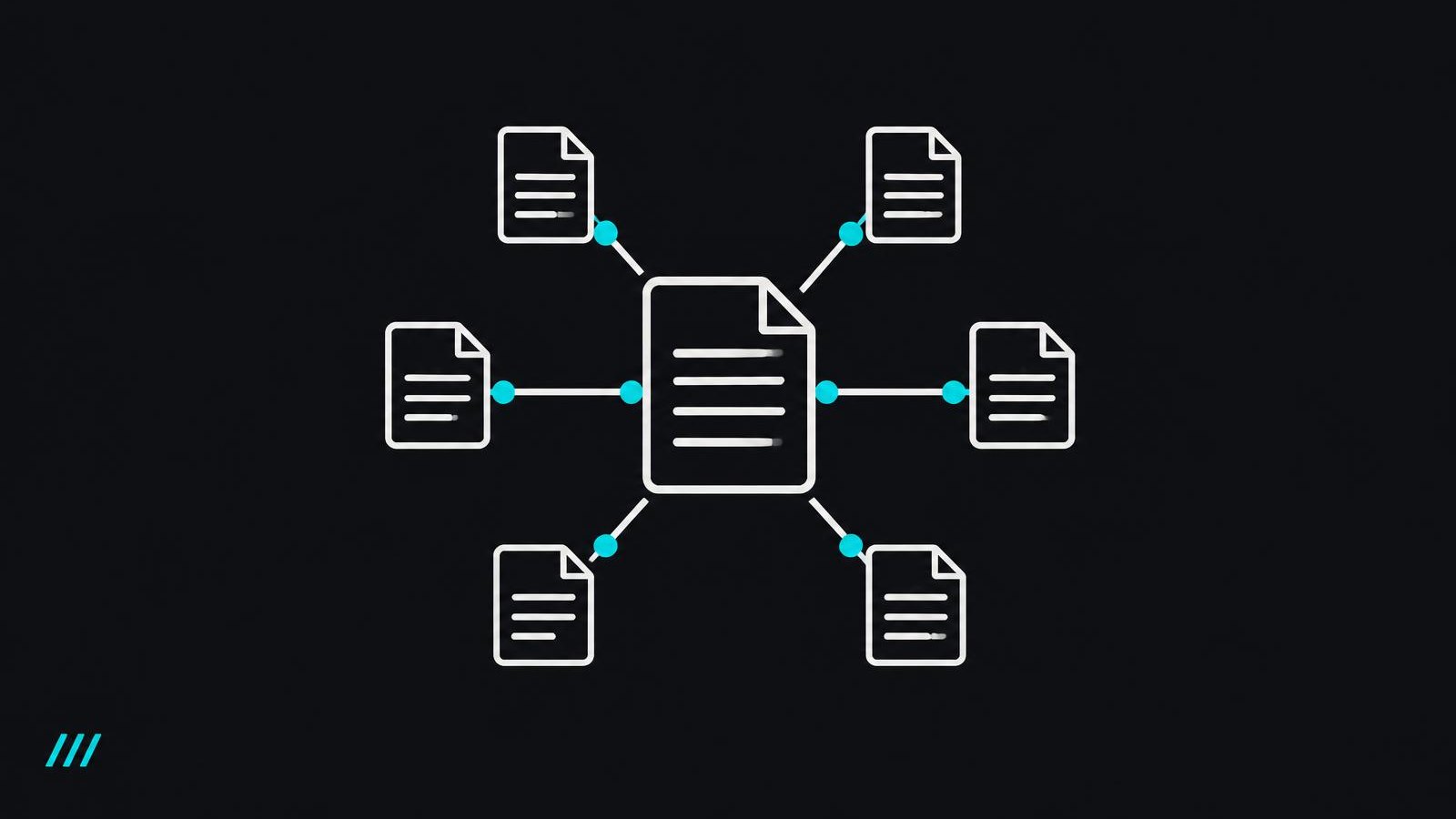
Internal links help visitors find related information and help Google discover pages and understand their context. A content cluster is a group of genuinely related pages connected around a topic or decision. Neither is a hidden AI ranking trick, but together they make a business website more coherent for both people and search systems.
The aim is not to link every page to every other page. It is to make the next relevant answer easy to find.
Start with a service, not a keyword spreadsheet
Suppose a company offers business process automation. Its website might need one commercial service page and several articles answering different customer questions:
- Process automation services: what is offered and for whom.
- How to identify processes suitable for automation.
- AI automation versus traditional workflow tools.
- What a pilot project should include.
- How to measure the outcome of an automation project.
Each page serves a different job. A visitor reading about suitability can follow a link to the comparison, then reach the service page when ready. This is a useful cluster because the links follow actual decisions.
What makes an internal link useful?
Use a descriptive sentence that explains the destination. "Read our checklist for choosing an automation pilot" tells more than "click here." The anchor should fit the surrounding text naturally.
Google's link guidance says that internal links can help it and visitors understand your website. It does not prescribe a magic number of links per article.
A useful link normally passes three tests:
- It helps answer a question the reader may have next.
- The destination is live, relevant and accessible.
- The link text describes what the destination contains.
Avoid inserting a link after every paragraph simply to increase link count.
Map the cluster before writing
Build a simple content map:
| Page type | Main purpose | Recommended connections |
|---|---|---|
| Service page | Explain and convert | Link to select supporting guides |
| How-to guide | Solve a specific problem | Link to relevant service and deeper guide |
| Comparison | Help people decide | Link to options, limitations and service |
| Measurement guide | Help evaluate results | Link to strategy and implementation |
This reveals gaps. If six articles explain what a service means but none helps a customer select it, the cluster is unbalanced.
Avoid keyword cannibalization
Two pages can overlap without being duplicates, but competing for the same exact intention with nearly identical content creates confusion. Before publishing, ask whether the new article offers a distinct answer.
For example, "What is GEO?" and "A beginner's introduction to GEO" may duplicate each other. "How to write source-worthy GEO content" and "How to measure citations from AI search" have different purposes and can support one another.
If two old pages serve the same purpose, consider improving one and linking or redirecting the other only after reviewing their existing search performance. Do not move established URLs casually.
Keep the technical implementation simple
Use ordinary HTML links that a crawler can follow. Important pages should not depend entirely on JavaScript-only click handlers, inaccessible navigation or a search box. Confirm that breadcrumbs, menus and contextual article links use the correct live URLs.
For multilingual sites, link to the appropriate language version when it exists. English articles generally connect to English services; Dutch articles should refer to Dutch resources. Reciprocal hreflang helps search engines understand equivalent translations, but it does not replace a visitor-facing language switch.
Why this matters for AI search
Google says its AI features may run multiple related searches to assemble an answer. A clear content structure helps make different aspects of a topic available, but Google does not guarantee that a cluster or internal link will earn an AI citation.
Think of your website as a set of resources supporting decisions rather than a list of isolated blog posts. The reader should be able to move from an answer to a comparison and finally to a service.
A 20-minute internal linking review
- Choose one important service page.
- Find five relevant articles that genuinely help its target audience.
- Check that each article links to the service where useful.
- Add a few contextual links among complementary articles.
- Verify that all links work on mobile and desktop.
- Check Search Console for discovery and indexing issues.
Record the links you change so you can review their usefulness later. Do not promise that rankings will rise within a certain number of days.
For a practical example, see our GEO content writing guide and SEO services. The same principles apply to AEO and GEO pages.